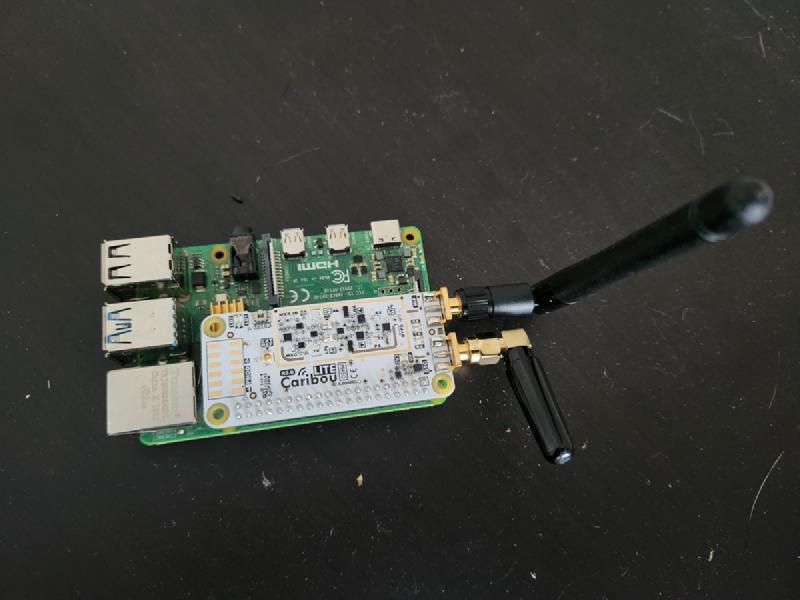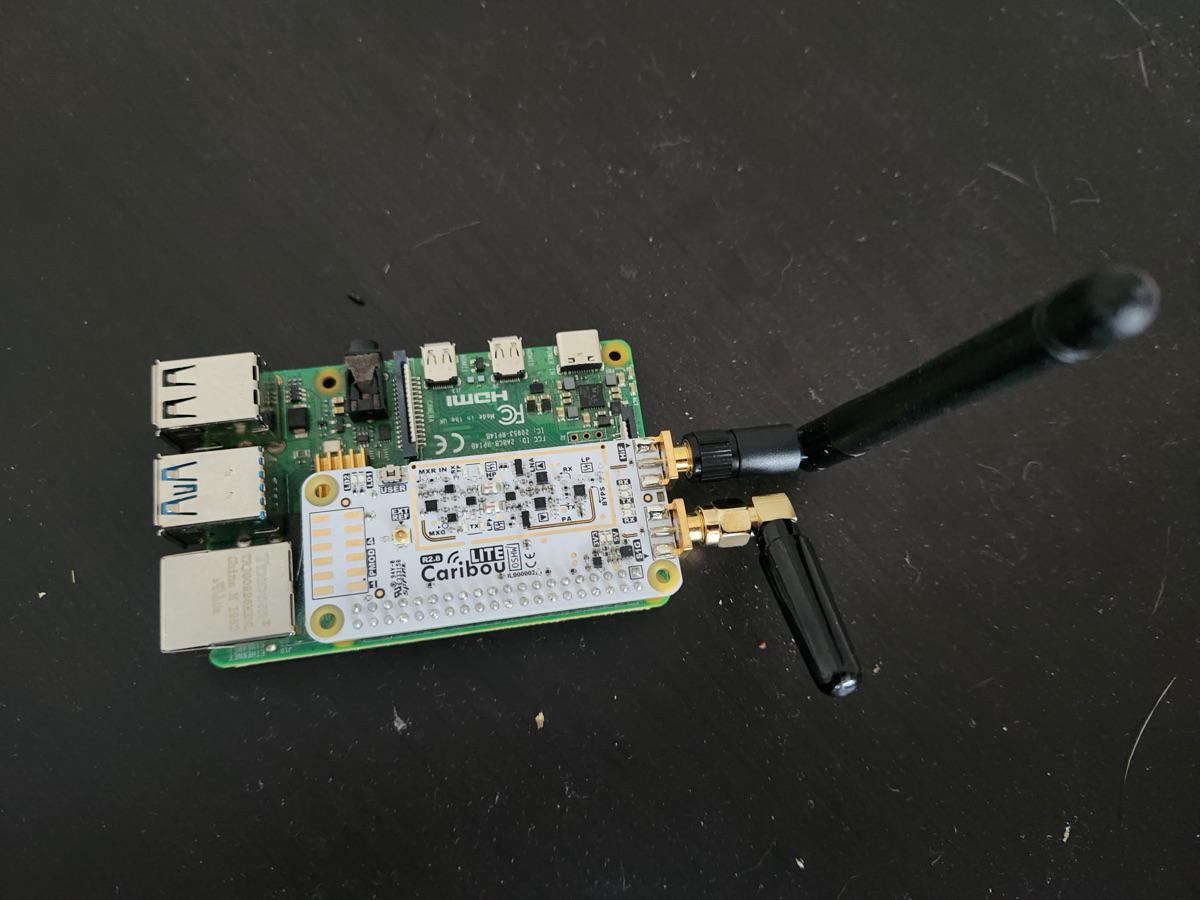
A Raspberry Pi image purpose-built for the CaribouLite software-defined radio HAT. Rather than manually configuring each SD card, this project uses Packer and Ansible to produce a reproducible image with all the SDR drivers, kernel patches, and boot configuration baked in — part of the Deevnet image factory. Flash a card, boot it up, and you’re ready for RF experimentation.
The idea#
I came across Jeff Geerling demonstrating the CaribouLite SDR HAT, and for me this was the first time seeing a software-defined radio in action. I’ve had an interest in radio tech and the HAT looked cool to try out. As it turned out, the setup was very complicated — kernel patches, boot configuration changes, driver builds — and I wanted to capture all those steps in code so it would be easy to rebuild if needed. Since this was a Raspberry Pi, it was a natural fit for the Deevnet image factory.
What I did#
I knew Packer could build Pi images on x86 even though the target is ARM, and I knew Ansible could apply configuration to an image before it’s sealed up. So the plan was straightforward: Packer builds the base Raspbian Bookworm image, Ansible provisions the CaribouLite SDR configuration in a chroot, and out comes a flashable image. That was the plan, at least.
What surprised me#
The build turned out to be significantly more complicated than expected. Even with Claude Code driving, the pipeline needed Podman to isolate the ARM image build from the Fedora host — running Packer with qemu-user-static for cross-architecture emulation inside a container. On top of that, the CaribouLite drivers required kernel patches across multiple Linux 6.x API changes — different fixes for 6.3, 6.4, and 6.12+ — and the Ansible provisioning had to run in an offline chroot against the image rather than a live system. What started as “automate the install steps” turned into a four-stage pipeline with container isolation, cross-compilation, kernel patching, and chroot-based configuration management.
Result#
In the end, the image builder works — albeit not exactly as originally envisioned. Setting up the SDR from scratch is now just three steps: make the image, boot it with the HAT connected and run the setup, then run the validation test. More importantly, this build helped me see a good pattern — image plus first-boot setup plus embedded documentation and tests baked right into the image. That pattern will be applied to future Pi projects for sure.
Takeaways#
- Finishing the SDR image is just the beginning of the radio journey. After setting up the client, there’s a whole world of radio to learn — the end of the image journey is just the start of the SDR journey.
- Packer + Ansible + Podman is a viable pipeline for cross-architecture Pi image builds, but expect more complexity than a native build.
- Baking a readme and validation tests into the image itself is a pattern worth reusing — the image becomes self-documenting.
- Kernel module builds across Linux versions are a moving target. Protecting patches with
git update-index --skip-worktreekeeps upstream pulls from clobbering your fixes.
The rig#