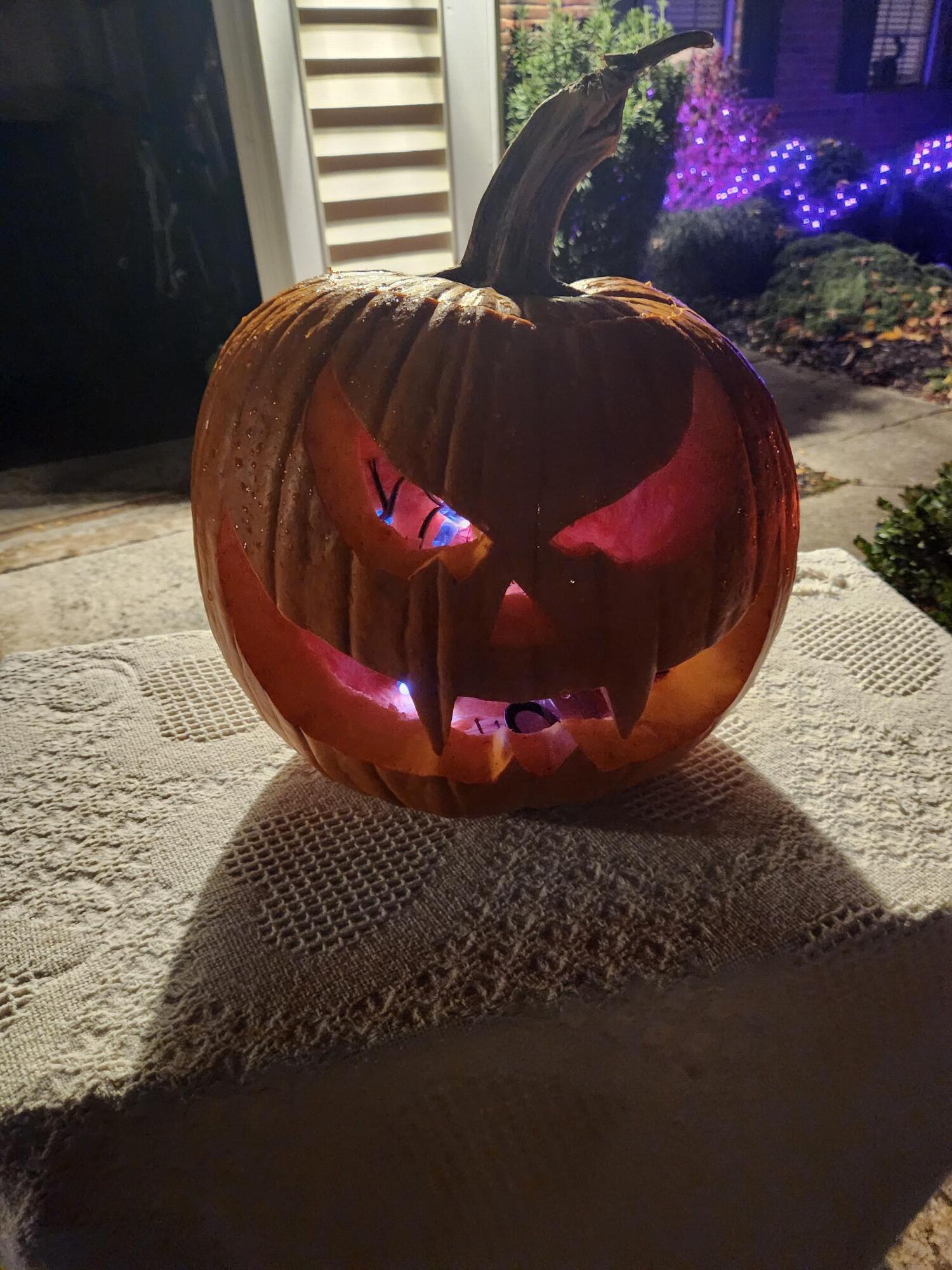
A Halloween pumpkin powered by an ESP32 — flickering flame LEDs at idle, then a strobe and evil laugh triggered by motion when trick-or-treaters walk up. Built in C with ESP-IDF and FreeRTOS, inspired by a Bitluni YouTube video that made it look easy. It was not easy, but it works great.
The idea#
I needed a simple project to get a better understanding of working with the ESP32, and Bitluni’s screaming pumpkin looked very accessible and fun. I figured I’d spin up my own version with a few twists — an evil laugh instead of a scream, and a nice flickering flame effect at idle.
What I did#
An ESP32 drives a strip of NeoPixel LEDs for a realistic flickering flame effect inside the pumpkin. A PIR motion sensor detects approaching trick-or-treaters and triggers a strobe effect plus an evil laugh played through I2S audio. The whole thing is written in C with the ESP-IDF framework, using FreeRTOS to run the LED animation and audio playback as separate tasks. Different sounds can be swapped in for variety.
What surprised me#
It took a lot more than a few hours — even with vibe coding. FreeRTOS timing was tricky. Getting the motion trigger, strobe effect, and audio playback to all fire at the right time required many rounds of tweaking. The tasks needed careful coordination to avoid stepping on each other. But after enough iteration it finally ran perfectly, and the idle flame effect actually looks great.
Result#
Fully working. The pumpkin looks fantastic at idle with the flickering flame, and the motion-triggered strobe plus evil laugh gets a solid reaction from trick-or-treaters. Future plan for next Halloween: build an evil pumpkin family — multiple pumpkins in different sizes, each with their own evil laugh that matches the size and character of the pumpkin.
Takeaways#
- The ESP32 is a remarkably capable little board for the price
- FreeRTOS is impressive — real multitasking on a microcontroller — but the timing coordination has a real learning curve
- “A couple hours” on YouTube can easily become days in practice, and that’s fine
- Vibe coding gets you started fast but embedded timing issues still require hands-on debugging
- The I2S board and small speaker aren’t loud enough — the next version needs a sound upgrade