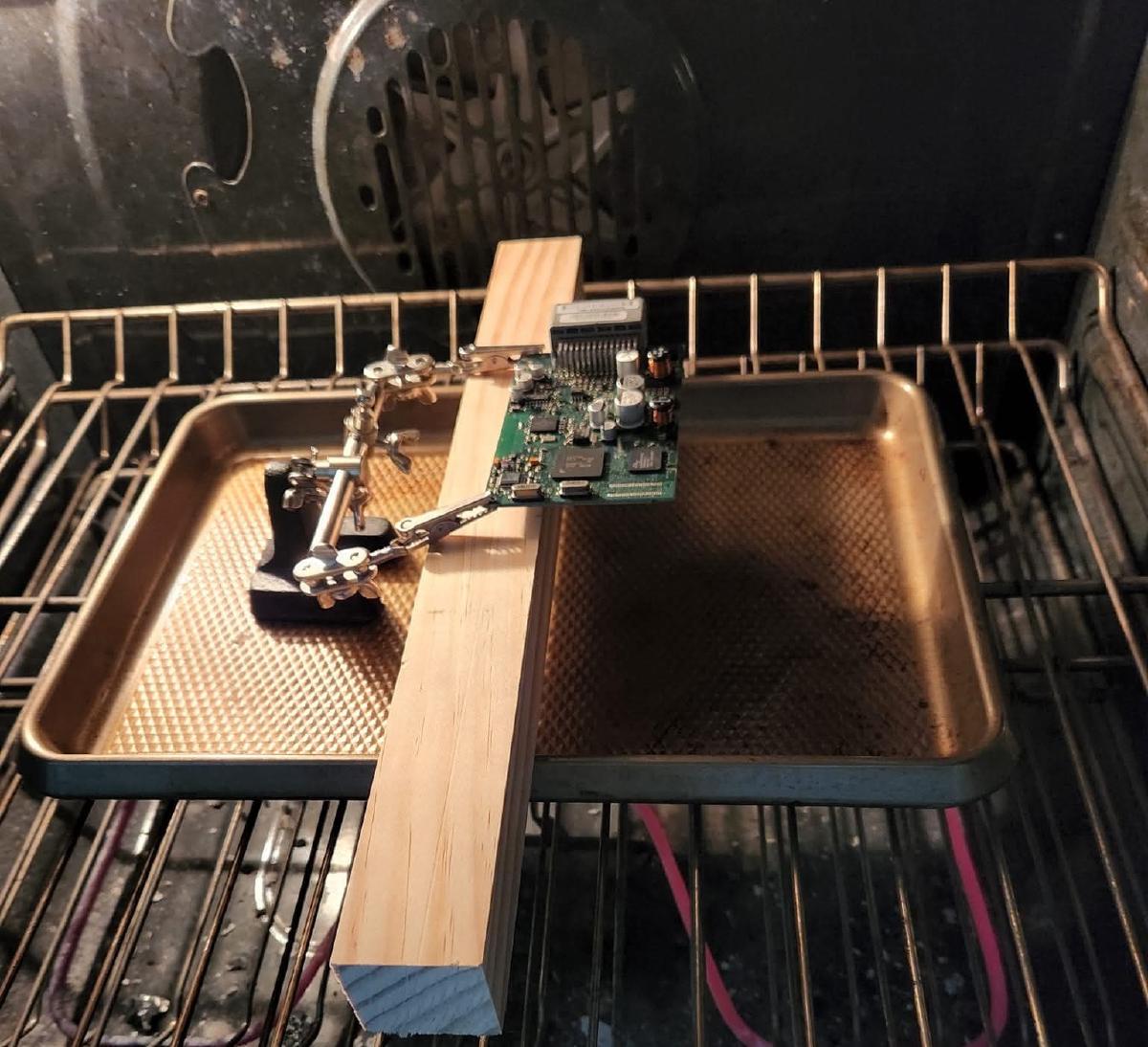
The HandsFreeLink Bluetooth module in my 2008 Acura had been dead for years — permanently stuck on “Booting Up” with no sign of life beyond that. Replacement modules run around $500, which is hard to justify on a car this age. I found forum posts about baking the circuit board in the oven to reflow the solder joints, and figured there was nothing to lose.
The situation#
In 2008, “Touring Luxury” meant you could talk to your car — albeit through a highly structured dance of button presses and voice commands so the system knew when you were talking. Press the talk button on the steering wheel, say “Call,” and the car would respond: “What name or number would you like to call?” Say “Mom,” hear “Calling…” and the Bluetooth would do its thing. No touch screen, no music streaming — just plain old phone integration. Primitive by today’s standards, but it felt like the future at the time.
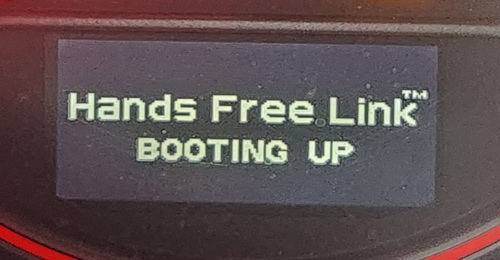 At some point the HandsFreeLink just stopped working. Press the button and the display would say “Booting Up” and then… nothing. It would sit there forever. This is apparently a well-known failure on these Acuras — something goes wrong on the circuit board inside the module, and the system never finishes initializing. The dealer fix is a new module, and aftermarket replacements aren’t much cheaper. For a car pushing close to 20 years old, $500 for hands-free calling felt like a tough sell.
What I tried#
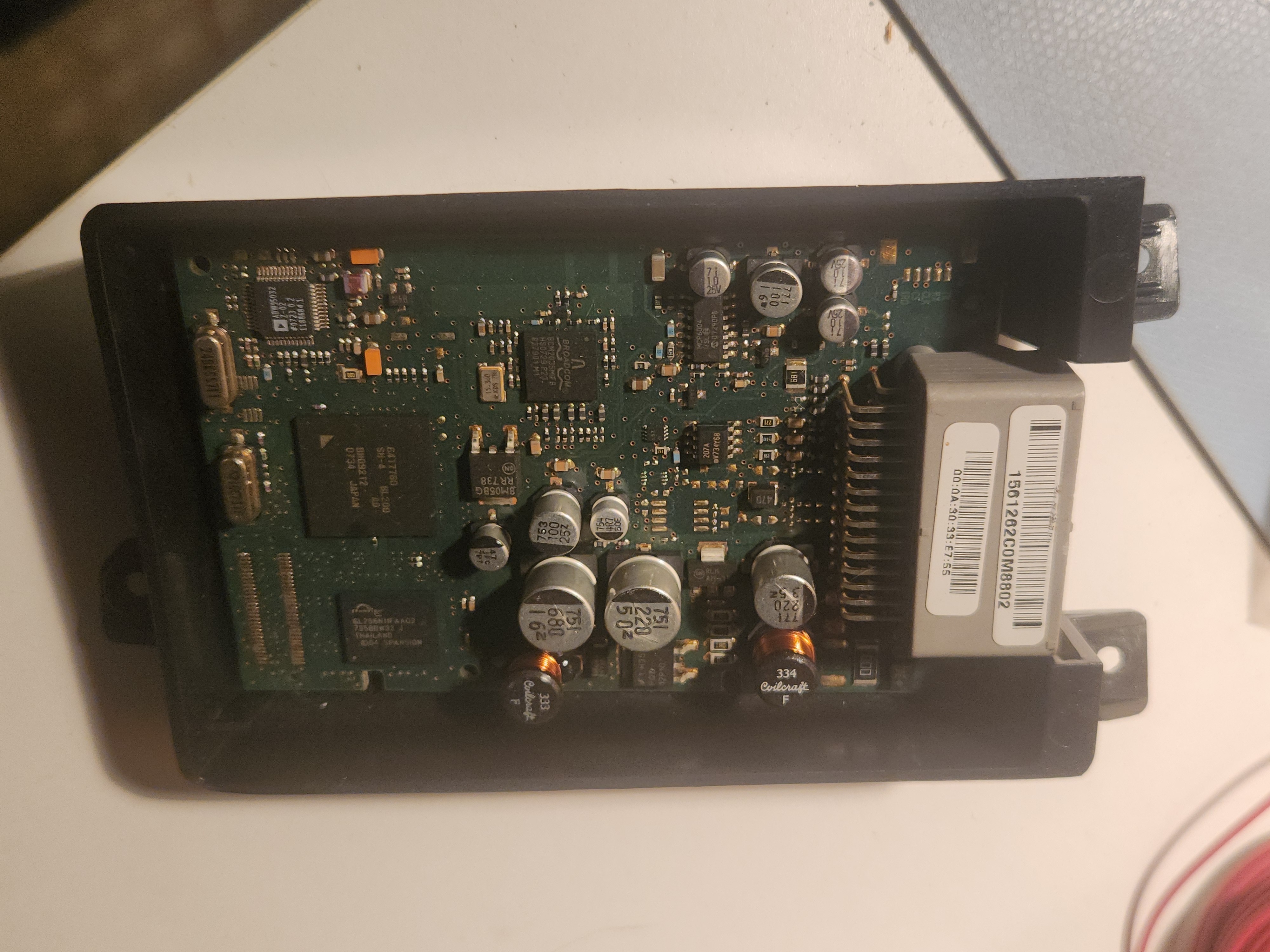
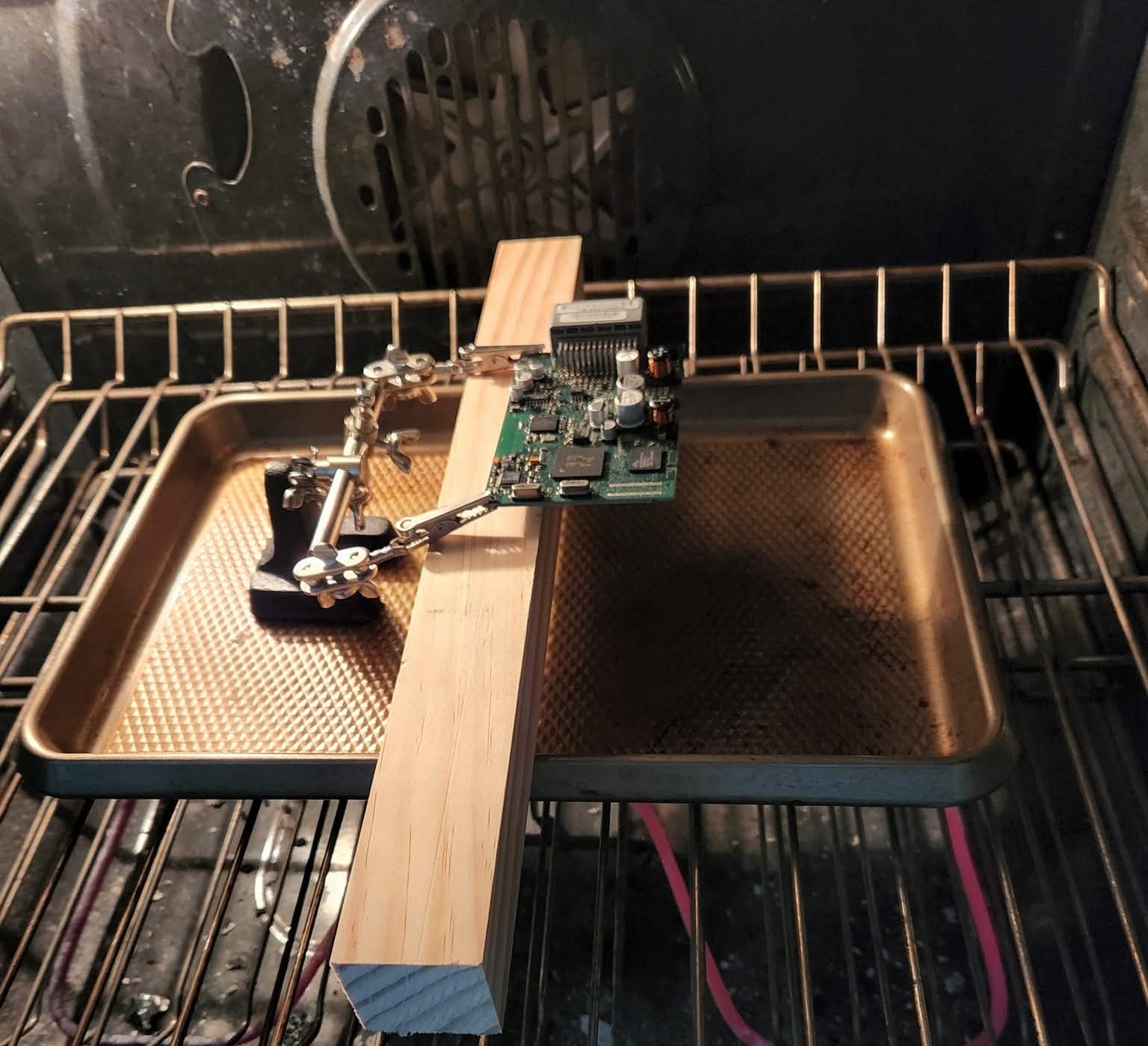
Searching the Acura forums turned up posts from people who had success with an oven reflow — the idea being that cracked solder joints on the board could be re-melted by baking the whole thing at a controlled temperature. I pulled the HandsFreeLink module out of the car, opened it up, removed the circuit board, and put it in the oven at around 385°F for about 30 minutes. Let it cool slowly, reassembled everything, and reinstalled it in the car.
What surprised me#
Drum roll — it worked. The system booted all the way up for the first time in years. I pressed the talk button and heard that old familiar voice: “What name or number would you like to call?” I honestly didn’t expect it to do anything. Even more surreal — my phone was still paired. It just connected and picked up exactly where it left off, as if nothing had ever been wrong. I almost felt like it was gaslighting me. There’s something about hearing a piece of electronics come back from the dead that feels like reuniting with an old friend.
Result#
Two days later, it was back to “Booting Up” and staying there. The reflow had worked long enough to prove the module was still in there — still capable of doing its job — but the solder joints (or whatever the underlying failure is) couldn’t hold. It was a bittersweet outcome. On one hand, the experiment confirmed the diagnosis and gave me a brief taste of success. On the other hand, a temporary fix on something like this is basically the same as no fix at all.
Why it didn’t last#
A kitchen oven is a blunt instrument for something that needs surgical precision. Consumer ovens are easily 20–50°F off from what they display, they have no programmable thermal profile, and they heat unevenly. A proper reflow follows a specific curve — gradual preheat, a soak phase to equalize temperature across the board, a controlled ramp to peak, and then a controlled cool-down. My oven likely only partially reflowed the joints: enough heat to make temporary contact, but not enough to form solid metallurgical bonds. Two days of thermal cycling in the car and they cracked right back open. That tracks.
The professional approach would be a reflow oven ($200–300 range) with a programmable profile, or better yet a hot air rework station ($50–150) that can target the suspect BGA chip directly without cooking the entire board. The real fix for BGA failures is often removing the chip entirely, reballing it with fresh solder, and reflowing it back down — something that requires the right equipment and a steady hand.
Here’s the detail that makes you think: the sellers offering replacement modules will give you $50 credit if you send your dead unit back as a “core.” That implies someone on the other end has a routine process for bringing these boards back to life — probably exactly the kind of professional rework described above. These aren’t going in the trash. Someone is fixing them and reselling them, which tells you the repair is very doable with the right setup.
One more thing worth mentioning — I’ve since heard from someone more knowledgeable that baking circuit boards in a food-prep oven is not a great idea. Solder flux and component coatings can off-gas stuff you don’t want anywhere near where you cook. Even if the reflow had been permanent, I wouldn’t recommend this approach going forward.
The fix itself was a failure, but I came away knowing a lot more about reflow, BGA rework, and what separates a kitchen-oven hack from a real repair. I’d call that a successful failure.
Takeaways#
- Oven reflow can absolutely work on failing BGA or fine-pitch solder joints — but without proper equipment and a controlled thermal profile, the results may only be temporary
- The fact that it booted at all confirmed the module’s electronics were still functional, just mechanically failing at the solder level
- At $500 for a replacement on an aging car, sometimes the right answer is to just live without it
- There was genuinely nothing to lose by trying — the module was already dead
- The old voice-command hands-free systems had a charm to them that modern infotainment has completely steamrolled